Telematics, AI and electrification: discover 3 innovations driving innovative fleet management and transforming vehicle fleet operations.
Fleet management has fundamentally changed. Since the early 2000s, it has evolved from paper-based processes to the real-time management of connected vehicles. Today, a fleet manager typically oversees around 400 vehicles, compared with up to 1000 in the past. Modern fleets generate far more data and require more complex decision-making. Three key innovations in fleet management are driving this transformation and deserve a closer look.
Key takeaways:
Telematics enables real-time vehicle tracking and helps optimise fleet operations.
SaaS fleet management software and AI automate administrative tasks and simplify fleet management.
Electrification and car sharing improve vehicle utilisation while reducing operating costs.
Successful fleet transformation depends on connected tools and continuous performance monitoring.
Why are fleet management innovations essential?
Fleet management innovations are now essential for keeping pace with changing mobility needs. Fleet operations are evolving under the combined pressure of three major forces: changing employee expectations, increasing regulatory requirements and rising operating costs. Remote and hybrid working have reduced commuting mileage while making vehicle allocation more complex. At the same time, environmental regulations and green taxation require organisations to make faster fleet decisions. As a result, fleet managers must continuously balance operational, financial and regulatory priorities.
Changing employee expectations and hybrid mobility
Drivers increasingly expect vehicles that support a mix of personal and business use, can be shared when needed and are often electrified. Vehicle fleets are becoming a mobility service rather than a fixed allocation.
Regulatory, environmental and economic pressures
Between CO2 reporting requirements, mandatory fleet electrification and rising energy costs, fleet management requires tools that provide the data and insights needed to support every decision.
Innovation 1: Embedded telematics and real-time data
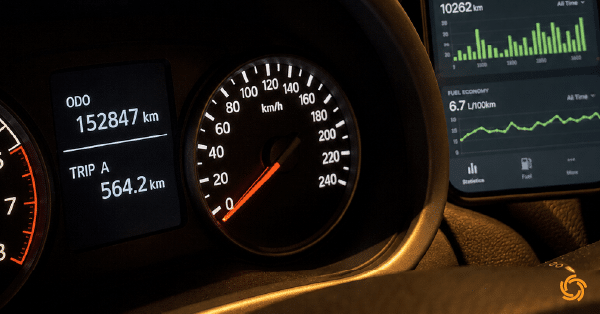
Embedded telematics is one of the most impactful innovative fleet management tools. Using a GPS-enabled connected device, it collects real-time data on vehicle location, fuel consumption, driving behaviour and mechanical condition. This information is then fed directly into fleet management software, where it is transformed into alerts, dashboards and performance scores. It provides the technological foundation for every other innovation. Without reliable data, neither AI nor predictive maintenance can deliver meaningful results.
Vehicle tracking and driving behaviour analysis
A connected device for fleet vehicles monitors harsh braking, engine over-revving and excessive idling. These insights help organisations reduce fuel consumption by identifying less efficient driving habits and supporting eco-driving training for drivers.
Predictive maintenance and lower operating costs
By combining real-world mileage, diagnostic fault codes and vehicle history, maintenance shifts from a reactive to a predictive approach. This reduces vehicle downtime, lowers operating costs and helps preserve residual vehicle value.
Innovation 2: Next-generation fleet management software
Fleet management innovation is also being driven by the latest generation of fleet management software. These SaaS platforms bring together contracts, invoicing, claims management, telematics and tax compliance within a single interface. They replace spreadsheets, reduce administrative workload and help organisations maintain continuous compliance. Providers such as hitechsoftware rely on open APIs to connect seamlessly with vehicle rental companies, fuel card providers and EV charging networks, enabling a unified approach to fleet management.
Data centralisation and automation
MOT reminders, traffic fine and parking charge reallocation, and internal recharging can all be automated. Fleet management software such as myrentcar streamlines these administrative tasks, reducing manual work and simplifying day-to-day fleet administration.
Artificial intelligence
Artificial intelligence is now delivering significant time savings for fleet managers. For example, myrentagent AI car rental software automatically captures and imports vehicle data into your fleet management software from a simple photo of the vehicle registration document. This allows fleet managers to spend less time on data entry and more time analysing fleet performance.
Innovation 3: Electrification and shared mobility
Among today’s most innovative fleet management ideas, electrification and shared mobility are reshaping fleet composition. Switching to electric vehicles is no longer a symbolic step. It is a strategic transformation that affects route planning, charging infrastructure, taxation and the driver experience. In our view, success depends on seamless integration between fleet management software, telematics and EV charging infrastructure.
Integrating electric vehicles into an existing fleet
EV charging infrastructure, the balance between home, workplace and public charging, and kWh consumption monitoring must all be carefully coordinated. Assess your drivers’ needs, compare the best electric vehicles available on lease, and ensure they are fully compatible with your charging infrastructure and fleet management tools. Otherwise, environmental benefits can quickly be offset by operational inefficiencies.
Car sharing, on-demand mobility and fleet optimisation
Car sharing and connected vehicles help organisations make better use of their fleets. Vehicles that would otherwise remain idle can be made available to other users through on-demand mobility. This fleet management innovation maximises vehicle utilisation while improving operational efficiency.
How can fleet safety management systems innovation transform your fleet?
Fleet safety management systems innovation can transform fleet operations, but success requires a structured approach. Start by auditing your fleet, selecting compatible technology solutions, training your teams and measuring performance over time. According to hitech’s experience, the most common mistake is deploying multiple tools without a common integration standard. A realistic transformation plan typically takes between 12 and 24 months and relies on shared performance indicators aligned with both the finance and HR departments.
Here is a summary of the three major innovations in fleet management and their level of implementation complexity:
| Innovation | Main expected benefit | Estimated ROI timeframe | Complexity |
| Embedded telematics | Reduced fuel consumption | Short term | Low |
| SaaS fleet management software and AI | Reduced administrative workload | Medium term | Medium |
| Managed electrification | Lower energy-related total cost of ownership (TCO) | Long term | High |
Key steps to modernise fleet management
Modernising fleet management involves five key steps:
- Audit your fleet
- Choose the right SaaS fleet management software
- Deploy embedded telematics
- Develop an electrification plan
- Monitor key performance indicators (KPIs)
Hitechsoftware supports organisations throughout the fleet audit process and helps them select SaaS fleet management software that integrates seamlessly with their telematics systems and electrification strategy. Myrentcar provides all the features needed to manage vehicle fleets efficiently and automate car rental operations. Combined with myrentagent AI for fleet management and other innovative fleet management solutions, it enables organisations to build a smarter fleet.


 Get a demo